

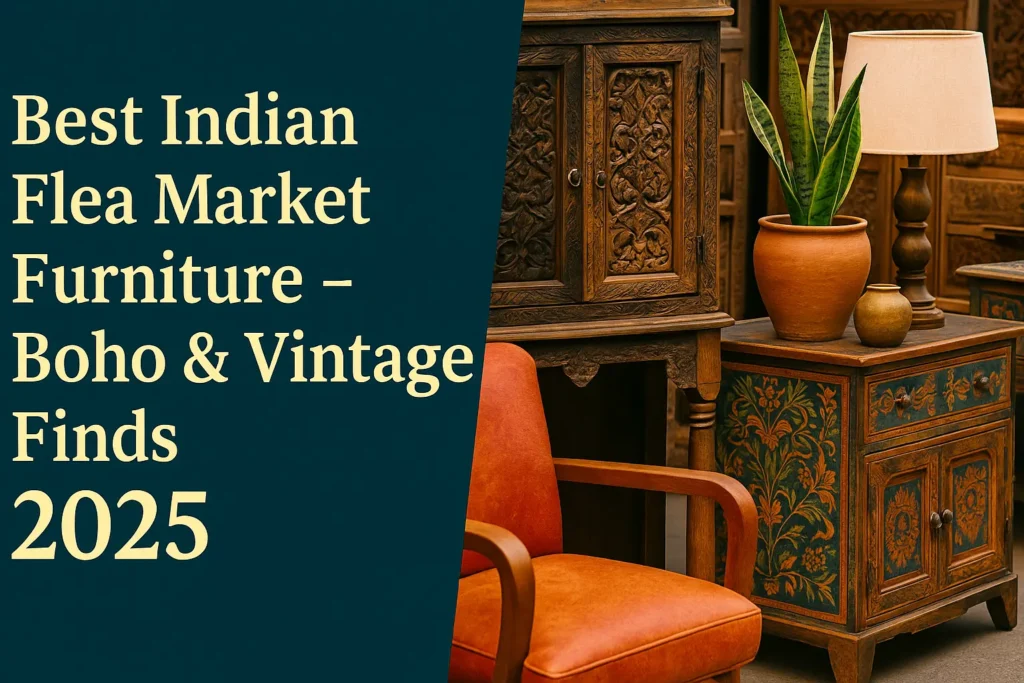
🪞 Top Furniture Finds from Indian Flea Markets (2025 Guide)
Discover India’s hidden treasure troves of vintage furniture, boho décor, and handcrafted artistry.
🪑 Introduction: Why Indian Flea Market Furniture is a Global Trend
Indian flea market furniture has become a global design obsession — a mix of rustic charm, handmade detail, and cultural heritage that few modern stores can match.
From Gurgaon’s Banjara Market to Mumbai’s Chor Bazaar and Delhi’s Dilli Haat, these vibrant markets are where artistry meets affordability.
People across the world now hunt for Indian flea market furniture not only for its look, but for the story each piece carries. It’s eco-friendly, durable, and completely unique — no two items are ever the same.
🛋️ What Makes Indian Flea Market Furniture So Special?
Each piece of furniture sold in these markets carries the fingerprint of Indian craftsmanship.
Unlike mass-produced furniture, flea market furniture tells a story — handmade by artisans using traditional tools, reclaimed wood, and recycled materials.
1️⃣ Sustainable Craftsmanship
Indian flea markets champion sustainability. Most vendors sell reclaimed wood furniture, upcycled cabinets, and hand-carved mirrors.
This not only helps reduce waste but supports local artisans who use eco-friendly materials.
2️⃣ Affordable Luxury
You don’t need to spend thousands to get a statement piece. A hand-carved teak console table or brass mirror from a flea market can rival boutique brands — at one-fourth the price.
3️⃣ Cultural Aesthetic
Each item reflects India’s diverse cultural heritage — from Rajasthani lattice work (jalis) to South Indian rosewood chests and Kashmiri walnut carvings.
Indian flea market furniture bridges the gap between tradition and modern interior design.
🏺 Top Indian Flea Markets for Furniture Lovers
Here’s a list of India’s best destinations to buy stunning furniture and décor — where every corner hides a design gem.
🏙️ 1. Banjara Market, Gurgaon
Banjara Market is Delhi NCR’s design paradise. It’s a sprawling open-air market known for boho-style furniture, hand-painted cabinets, mirrors, and ceramic pottery.
- Best Buys: Wooden coffee tables, cane chairs, carved mirrors, jute lamps.
- Price Range: ₹1,000 – ₹15,000
- Pro Tip: Visit early morning for fresh stock and best bargains.
- Style Note: This market’s furniture perfectly suits minimalist, rustic, or bohemian interiors.
Indian flea market furniture from Banjara Market is especially popular with interior designers and social media influencers.
🛍️ 2. Chor Bazaar, Mumbai
Known as “The Thieves Market,” Chor Bazaar is one of India’s oldest and most iconic flea markets.
It’s famous for vintage furniture, brass décor, and old colonial pieces from the British era.
- Best Buys: Antique trunks, vintage chairs, brass lamps, old clocks.
- Price Range: ₹2,000 – ₹50,000 (depending on rarity)
- Pro Tip: Haggle politely — prices drop 30–40% with negotiation.
- Why Visit: Each lane feels like a time capsule filled with history and nostalgia.
Many collectors and film set designers source Indian flea market furniture from Chor Bazaar for period-style décor.
🏠 3. Dilli Haat, New Delhi
If you prefer organized markets over chaotic ones, Dilli Haat is your go-to.
Here, you’ll find curated stalls selling handcrafted wooden furniture directly from artisans across India.
- Best Buys: Folding tables, stools, wall décor, and miniature cabinets.
- Price Range: ₹1,500 – ₹10,000
- Bonus: Every month features a different regional craft fair — perfect for discovering unique artisan pieces.
🧺 4. Shilparamam, Hyderabad
Shilparamam is a cultural village and one of India’s cleanest flea markets.
It features terracotta pottery, cane furniture, and handwoven textiles alongside stunning small furniture pieces.
- Best Buys: Bamboo chairs, wall shelves, handmade mirrors.
- Pro Tip: Great place for eco-friendly buyers who prefer sustainable materials.
- Vibe: Calm, aesthetic, and artistic — ideal for slow shopping experiences.
🌾 5. Johari Bazaar, Jaipur
Jaipur’s Johari Bazaar is a colorful maze of handicrafts, jewelry, and wooden furniture.
Local artisans from Rajasthan display brightly painted cupboards, jharokha mirrors, and traditional Rajasthani chairs.
- Best Buys: Painted wooden almirahs, benches, and chests.
- Price Range: ₹2,500 – ₹30,000
- Design Tip: Perfect for eclectic or royal-style interiors.
🧭 How to Identify Authentic Indian Flea Market Furniture
Not all pieces sold in flea markets are genuine antiques. Here’s how to spot the real deal:
- Check Material: Real teak, rosewood, or mango wood feels heavy and solid.
- Inspect Craftsmanship: Look for hand-carved details — not machine-cut edges.
- Smell the Wood: Natural wood has an earthy scent, unlike synthetic finishes.
- Ask the Seller: Many artisans proudly share where the piece was made.
- Avoid Over-Polished Surfaces: Authentic flea market pieces usually have a matte or slightly distressed finish.
🎨 Styling Tips: How to Use Indian Flea Market Furniture at Home
Indian flea market furniture adds warmth and individuality to any space. Here’s how to style it perfectly:
🛋️ 1. Mix Old with New
Pair an antique table with a modern sofa. The contrast adds depth and personality.
🌿 2. Add Plants and Textiles
Complement wooden furniture with indoor plants, kilim rugs, and handwoven throws.
💡 3. Highlight with Warm Lighting
Soft yellow lighting enhances the earthy tones of wooden furniture.
🖼️ 4. Create a Statement Corner
Use a single standout piece — like a mirror or vintage trunk — as the focal point of your living room.
Indian flea market furniture is perfect for anyone who loves storytelling through design.
💰6. Tips for Bargaining and Buying Smart
- Always visit in daylight — inspect wood quality under natural light.
- Carry cash; many sellers don’t accept cards.
- Don’t show too much interest immediately; ask prices casually first.
- Bundle buys — buying multiple pieces often gets better discounts.
- Hire a local porter or transporter if you buy big items.
🌍 7. Online Indian Flea Markets (for Global Buyers)
You don’t need to be in India to buy Indian flea market furniture anymore.
Many sellers now list their items on platforms like:
- Etsy India
- Instagram (Hashtags: #banjaramarket #indianfurniture)
- Craftsvilla & Pepperfry
- Independent artisan websites
Most ship globally with custom packaging for international customers.
✨ Conclusion: Bring India’s Handcrafted Soul Into Your Home
Indian flea market furniture isn’t just décor — it’s living art.
Every scratch, brushstroke, and imperfection carries a story of culture, patience, and creativity.
Whether you’re furnishing a cozy studio or decorating a villa, choosing Indian flea market furniture adds a soul that no modern furniture factory can replicate.
Make your home global, but let your furniture speak Indian.
🌾 8. How Flea Market Furniture Adds Personality to Modern Homes
In an era of mass-produced furniture, personalization has become rare.
That’s where flea market furniture brings back charm — these pieces aren’t made for everyone; they’re meant for you.
Every dent, faded color, and handmade texture reflects a story.
When you walk into a living room with a hand-carved Rajasthani mirror or a repurposed vintage bench, you instantly feel a connection — it’s not just décor, it’s emotion.
Here’s how flea market furniture transforms modern spaces 👇
🪑 A Touch of Soul in Minimal Homes
Modern apartments often feel sterile — glass, metal, and white walls.
Adding a distressed coffee table or jute rug instantly brings warmth.
It balances clean lines with raw, organic beauty.
🎨 Layered Textures Create Depth
Flea market finds naturally mix materials — wood, brass, iron, and fabric.
This layering creates visual interest. Even a small piece like an antique mirror can break monotony.
🌿 Sustainability as a Design Statement
Buying second-hand, handcrafted furniture isn’t just aesthetic; it’s eco-conscious.
You’re saving a piece of history from being discarded — and saving the planet from more plastic furniture.
🕯️ Storytelling Through Spaces
A home full of flea market furniture becomes a visual storybook.
Guests don’t just admire it — they ask questions, and every item becomes a conversation starter.
🪵 9. Behind the Scenes: The Artisans and Their Legacy
Every beautiful piece at a flea market has a maker behind it — often an unsung artisan.
Many of these craftsmen come from regions like Saharanpur, Jodhpur, and Barmer, where woodworking and carving have been passed down for generations.
👨🏭 The Hands Behind the Craft
- Saharanpur: known for intricate wood carving on rosewood and sheesham.
- Jodhpur: famous for reclaimed wood furniture with pastel paints.
- Barmer: rustic finishes and tribal patterns.
When you buy from flea markets, you indirectly support these artisans.
Unlike mass retailers, the profit goes straight to families keeping these traditions alive.
💬 Quote from an Artisan
“We make with heart, not machines.
Each mark is our fingerprint.” — Raju Meena, Jodhpur artisan.
Buying from these markets isn’t just shopping — it’s preservation of heritage.
🪶 10. Regional Furniture Styles You’ll Find
Flea markets across India reflect the country’s diversity.
You’re not just exploring styles — you’re exploring India itself.
🌸 Rajasthani Style
- Bright colors and ornate carvings.
- Often made with reclaimed wood.
- Distressed turquoise, yellow, and white finishes dominate.
🌴 South Indian Style
- Teak and rosewood-based, heavy and long-lasting.
- Minimal carvings, simple polish, strong presence.
🌾 Bengali Colonial Style
- British influence — curved legs, polished surfaces.
- Classic brown hues, elegant symmetry.
🐘 Tribal & Rustic Style (Central India)
- Rough textures, unpolished finishes, bold designs.
- Looks raw yet powerful in modern homes.
If you blend one piece from each style, your home becomes a cultural mosaic.
🧭 11. How to Identify Authentic Furniture
Many flea markets also sell “faux antiques” — so here’s how to ensure you buy the real thing 👇
| Test | What to Check | Real Antique Sign |
|---|---|---|
| Weight Test | Lift the piece | Real teak/rosewood feels heavy |
| Smell Test | Smell wood edges | Natural oil scent = real wood |
| Backside Check | Flip or check joints | Hand-chiseled marks show craftsmanship |
| Paint Layers | Scratch small hidden spot | Multiple color layers = old repainting |
| Sound Test | Knock on surface | Deep tone = solid wood; hollow = fake MDF |
Always ask the vendor where it’s from — “Jodhpur”, “Saharanpur”, or “Jaipur” are good signs.
🧰 12. How to Restore and Maintain Flea Market Furniture
Flea market finds often need some TLC (tender loving care) before they shine.
Here’s how to give them new life without losing their character:
🧴 Step 1: Clean Gently
Use a soft cloth and mild soap water.
Avoid harsh cleaners — they can strip the natural oils.
🪞 Step 2: Sand Lightly
For rough edges or chipped polish, use fine-grit sandpaper.
Go slowly — over-sanding ruins texture.
🪔 Step 3: Oil and Polish
Use coconut oil, linseed oil, or beeswax polish.
Apply evenly, let it soak overnight, then buff gently.
🌤 Step 4: Sun-Cure Occasionally
Expose wooden furniture to sunlight once a month to prevent moisture buildup.
🚫 Avoid:
- Water-based paint removers
- Direct moisture
- Plastic polish sprays
Done right, your piece will last 15–20 years — maybe more.
🏷️ 13. Online Alternatives to Visit
Can’t visit flea markets in person? No problem — here are digital spaces where artisans and sellers list their products:
| Platform | Specialty | Region |
|---|---|---|
| Etsy India | Global marketplace for handmade & vintage furniture | Pan-India |
| Jaypore | Premium Indian crafts | Delhi-based |
| The Decor Kart | Modern rustic furniture | Online only |
| Instagram Pages | Search hashtags like #BanjaraMarket or #IndianBohoFurniture | Gurgaon, Mumbai, Pune |
Buying online helps artisans reach global buyers — just verify seller ratings before big purchases.
💡 14. Flea Market Furniture Trends for 2025
Design trends keep evolving — but flea market furniture remains timeless.
Still, these new 2025 trends are worth noting:
🪶 Trend 1: Distressed White Finishes
Scandinavian meets Indian — minimal, soft-toned pieces with faded textures.
🪔 Trend 2: Fusion Furniture
Combining Indian carving with European silhouettes — rustic elegance.
🪙 Trend 3: Upcycled Art
Old doors turned into headboards, window panels turned into mirrors.
🌿 Trend 4: Earthy Palettes
Terracotta, sage green, mustard, and deep browns dominate.
🪞 Trend 5: Mix of Materials
Metal + wood combos are becoming popular in boho homes.
✨ Bonus Trend: Storytelling Corners
People now build “memory corners” — a small spot styled entirely with flea market finds.
🎯 15. Economic Impact — Supporting India’s Local Market
Every rupee you spend in a flea market supports 2–3 local families.
These markets sustain a circular economy — artisans, transporters, polishers, and refurbishers all benefit.
Unlike imported or factory-made furniture, flea market goods are locally sourced, locally crafted, and locally reused.
It’s slow commerce — ethical, sustainable, and deeply human.
🌏 16. Global Appeal of Indian Flea Market Aesthetics
From California to Copenhagen, “Indian Boho” is now a global trend.
Interior designers are blending Jaipur mirrors with Moroccan lamps and Scandinavian layouts.
Why it works:
- It’s versatile — fits minimal, vintage, and boho homes alike.
- It feels human — handcrafted pieces stand out in AI-generated design worlds.
- It adds texture, history, and emotion — three things minimal design lacks.
Pinterest and Instagram are full of international influencers using Indian flea market furniture in photo shoots, Airbnb décor, and concept stores.
❤️ 17. Final Thoughts
Indian flea markets are more than shopping destinations — they’re cultural ecosystems where creativity, sustainability, and affordability meet.
Every trip there is an adventure — bargaining, laughing, discovering forgotten treasures.
So, next time you pass by a dusty old cabinet or a hand-painted mirror, look again — it might just be the piece your home has been waiting for.
🪞 Decorate less with products, more with purpose.
What are the best Indian flea markets for furniture?
Some of the best Indian flea markets for furniture include Banjara Market in Gurgaon, Chor Bazaar in Mumbai, and Dilli Haat in New Delhi. These markets offer handcrafted, vintage, and Boho furniture at affordable prices.
Are flea market furniture pieces durable and long-lasting?
Yes. Most Indian flea market furniture is made from solid wood like teak, rosewood, or mango wood. With basic care such as polishing and cleaning, these handcrafted pieces can last for many years without losing their charm.
Can I buy Indian flea market furniture online?
Absolutely. Many sellers list authentic Indian flea market furniture on Etsy, Instagram, and craft-based marketplaces. Buying online allows you to access handcrafted pieces directly from local artisans across India.
How can I restore and maintain old wooden furniture from flea markets?
Clean gently with a soft cloth, sand lightly if needed, and apply natural polish or coconut oil. Avoid harsh chemicals and moisture exposure. Proper care keeps Indian flea market furniture beautiful and durable for decades.
Why is Indian flea market furniture popular worldwide?
Because it blends culture, sustainability, and artistry. Indian flea market furniture reflects authentic craftsmanship, eco-friendly materials, and timeless design — making it highly desirable for global Boho and vintage home décor lovers.
