

Introduction — Why Banjara Market Crockery Is a Goldmine
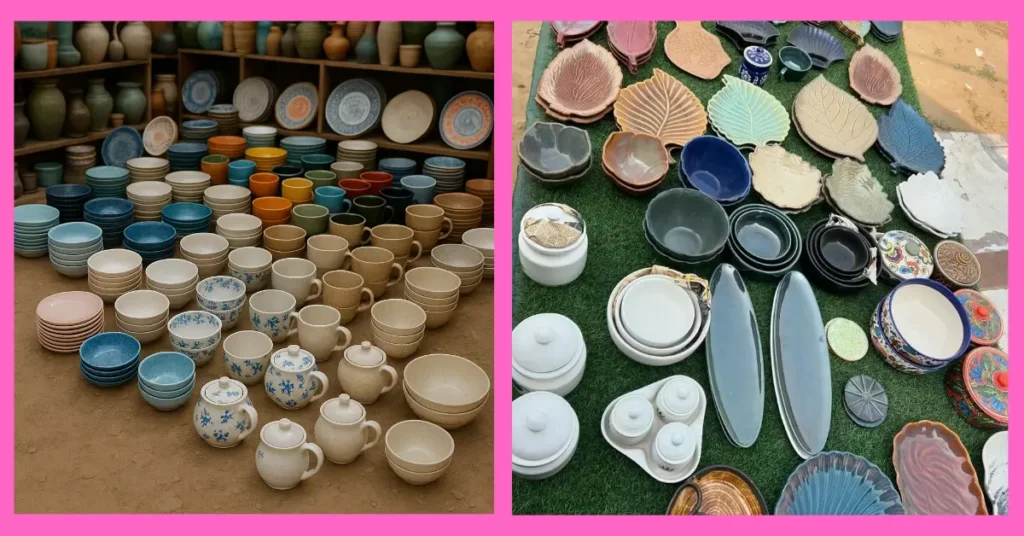
Banjara Market crockery isn’t just about buying plates and bowls at cheap prices — the real experience is far more emotional and sensory than people realise. The moment you enter the ceramic lanes, you’ll notice something almost overwhelming: endless stacks of matte plates leaning against each other, towers of bowls balanced precariously on crates, colours ranging from earthy stone-greys to deep forest greens to muted pastels that look like they belong in curated Pinterest kitchens. There’s a sense of chaos, but hidden inside that chaos is incredible value — value that most people never see because they don’t know what to look for.
If you pause for just a moment, run your fingers across the surface of a stoneware plate, feel the temperature of the ceramic, the texture of the glaze, the weight that tells you whether the piece was fired properly or rushed through production — you start noticing a world of details that average shoppers walk past blindly. That’s the core difference between someone who buys Banjara crockery successfully and someone who goes home disappointed.
The truth is simple: good ceramics don’t scream for attention — you feel their quality before you see it.
The quiet weight of a plate, the smoothness of a glaze, the solid base of a bowl — these are the things that reveal craftsmanship. And this guide will teach you to identify all of it without feeling confused or overwhelmed.
Why Banjara Market Crockery Is So Underrated (And Why It Beats Online Stores)
Most people visiting Banjara Market focus on furniture or mirrors and treat crockery as a side attraction. That’s a massive mistake. If you understand ceramics even a little, you’ll realise that Banjara Market crockery is one of the few places in India where you can get genuinely premium dinnerware at near-wholesale prices.
Unlike furniture, crockery quality is surprisingly consistent in Banjara because it mostly comes from three major sources:
1️⃣ Khurja factories, famous for colourful ceramics and durable everyday plates
2️⃣ Jaipur stoneware units, known for matte and speckled luxury-style dishes
3️⃣ Export-surplus distributors, where you find plates originally meant for international brands
When you browse online and see a single stoneware plate costing ₹499–₹899, you’re paying for branding, logistics, packaging, and photography — not the ceramic itself. The same plate, often from the same factory batch, ends up in Banjara Market when there’s overstock or minor cosmetic variation. That’s the only reason you get it for ₹180–₹250.
And here’s the irony:
Most cosmetic flaws don’t affect durability at all.
A tiny glaze bubble or a minor colour gradient doesn’t change the strength or firing quality of the ceramic. But online brands reject these for aesthetic consistency, and stalls in Banjara buy them in bulk.
So if you have an eye for detail — you win. If you don’t — you overpay or pick defective pieces.
This guide makes sure you never fall in the second category.
Understanding the Different Types of Crockery (Beyond the Simple Names)
People often think crockery = plates + bowls + cups.
But banjara market crockery has layers, and understanding these layers makes you a smarter shopper.
Dinner Plates — The Real Showpieces
A good dinner plate is like good architecture — the beauty lies in the details you don’t notice immediately. When you pick up a plate from Banjara, don’t judge it only by the design on top. Feel its weight; a properly fired stoneware plate will have a deep, balanced heaviness that feels grounded in your hand. The surface will feel smooth but matte, almost like holding a river stone. When you tilt it under the light, the glaze should shift softly, not glare back aggressively.
The wrong plates are easy to spot once you know the signs:
lightweight, overly shiny, slippery glaze, hollow sound, uneven bases that wobble. These will look pretty during the first week and then crack under hot water or chip around the rim.
Dinner plates are where Banjara gives you the highest savings because online these designs cost ridiculous amounts. If you choose wisely, you can build a premium dinner set for ₹1000 that would cost ₹4000–₹6000 online.
Quarter Plates — Clean, Simple, Effortless
Quarter plates are more forgiving. They’re smaller, easier to fire evenly, and rarely come with structural issues. They’re perfect for snacks, desserts, or even as styling props for food photography. These are the safest bet for beginners, especially if you’re nervous about making a wrong purchase.
Bowls — The Hidden Treasure Category
If you ask experienced Banjara shoppers what the best-value category is, everyone will say bowls without hesitation. The ramen bowls, textured pasta bowls, Japanese-style deep bowls — these are shockingly premium in both appearance and feel. When you hold a good bowl, it feels almost like holding a handmade artisanal piece. Thick, weighty, grounded, beautifully glazed.
But again, technique matters. Some bowls are inconsistent in shape, some have rough rims, some are glazed poorly at the base causing water absorption over time. If you follow the inspection steps given later, you’ll never pick a bad one.
Mugs — Beautiful but Risky
Mugs in Banjara can be stunning — rustic handles, matte finishes, thick-walled designs that look straight out of a café. But the biggest weakness is the handle joint. If the joint is poorly made, the mug won’t survive even one year of daily use. Mug selection is 70% about the handle, 30% about the body.
Serving Platters & Large Bowls — Where the Real Luxury Lies
These pieces are almost always the ones that make you stop and say, “How is this only ₹250?” Big, heavy platters with speckled glazes, beautifully textured serving bowls meant for salads or biryani — these are where Banjara Market crockery truly competes with premium brands. Many luxury restaurants buy from these exact stalls.
The REAL Prices of Banjara Market Crockery (Ignore Seller Quotes)
Sellers always open with a high number expecting negotiation.
Here are the actual buying prices verified through multiple visits:
- Dinner Plates → ₹180–₹250
- Quarter Plates → ₹100–₹150
- Small Bowls → ₹60–₹120
- Big Bowls → ₹120–₹180
- Mugs → ₹100–₹180
- Serving Bowls/Platters → ₹180–₹350
If someone quotes ₹600 for a plate, they are trying their luck.
If you’re informed, nobody can fool you.
The Deep Inspection Guide (This Is What Makes You a Real Expert)
This is where the real skill lies. The quality of banjara market crockery becomes obvious only when you know what to test. I’m giving you the most accurate method:
1. The Hairline Crack Test — Sunlight Never Lies
Tilt the ceramic under sunlight.
Hairline cracks glow subtly, like thin silver lines under the glaze.
These are invisible indoors.
If you see even one → reject instantly.
2. The Sound Test — The Easiest Reliability Indicator
Tap the rim gently.
A strong ceramic makes a clear ringing sound.
A dull thud means internal weakness or poor firing.
3. The Base Stability Test — The Most Ignored But Most Important
Put the item on a flat tile.
Press gently on the edges.
If it wobbles even slightly, don’t buy it.
Uneven bases ruin stacks and break easily.
4. The Glaze Inspection — Your Fingers Are the Best Judge
Run your fingers slowly across the surface.
A good glaze feels calm, smooth, evenly finished.
Cheap glaze feels slippery, glass-like, or uneven.
5. The Underside Check — Where Cheap Items Hide Their Flaws
Flip the plate.
Check for:
- chipped edges
- glaze overflow
- uneven sanding
- color inconsistency
This area reveals everything sellers try to hide.
6. The Weight Balance Test
Good ceramics feel like they have a soul — evenly weighted, grounded, solid.
Cheap ones feel hollow or too light for their size.
What You SHOULD Buy (Expert Picks That Never Fail)
- Matte black stoneware plates
- Speckled ramen bowls
- Thick-walled serving bowls
- Deep pasta bowls with texture
- Handmade-glaze platters
- Earth-tone quarter plates
- Rustic mugs with thick handles
These items consistently offer the best balance of aesthetics + durability.
What You Should AVOID at All Costs
- Ultra-thin plates
- Very shiny/glossy plates (cheap glaze)
- Metallic rim designs (peel off fast)
- Neon colors
- Glass plates
- Plates with rough unglazed bottoms
These will break or crack in under a few months.
Bargaining Technique (Used by Experienced Shoppers)
Crockery bargaining is easy:
- Pick 8–12 items first.
- Ask total.
- Cut quote by 40%.
- Silence.
- Final price settles naturally.
This method works every single time.
Packing & Transport (To Avoid Breakage)
- Wrap each plate individually.
- Do NOT let rims touch each other.
- Bowls must be nested with paper rolls.
- Use your own strong tote bag.
- Don’t stack too high.
Proper packing is the difference between safe delivery and heartbreak.
Conclusion — Is Banjara Market Crockery Worth It? Absolutely.
If there is one category in Banjara Market that you should never skip, it’s crockery. Whether you’re furnishing a new home, setting up a café, styling your dining table, or simply someone who appreciates beautiful objects — banjara market crockery delivers unmatched value. With the right inspection techniques, you can walk out with premium, durable, aesthetic ceramics at unbelievably low prices.
No showroom gives you this combination of beauty, variety, and affordability.
And once you learn to shop like an expert, you’ll never pay full price for ceramics again.
