
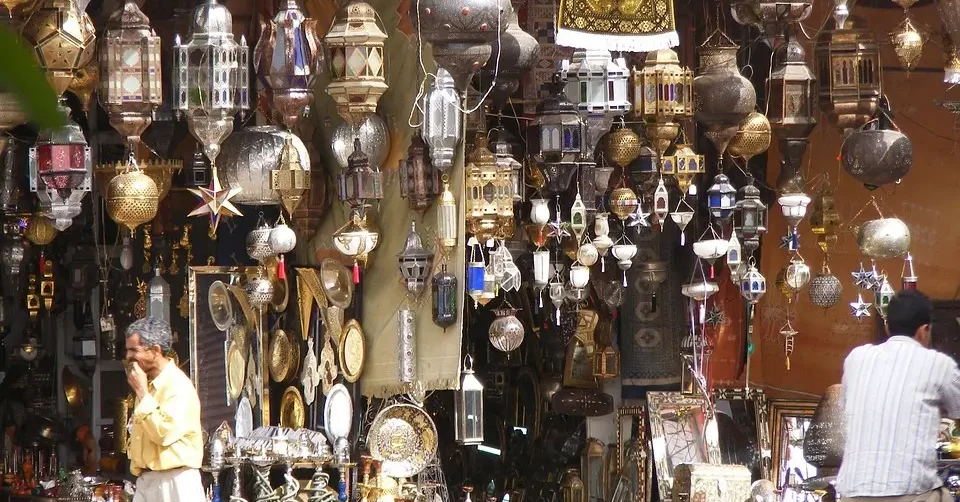
I’ll be brutally honest —
If you go to Morocco without learning how to bargain, you’ll pay double, maybe even triple the real price.
Not because sellers hate tourists, but because bargaining is part of Moroccan culture.
It’s a game.
A tradition.
A negotiation dance.
The souks of Marrakech, Fez, Chefchaouen, Essaouira — all run on the same unwritten rule:
👉 If you don’t bargain, you lose. If you bargain badly, you lose more.
After spending hours negotiating with Moroccan sellers (and getting fooled a few times), I built a system that works almost every time.
Here it is — raw, real, unfiltered.
⭐ Quick Bargaining Summary (If You’re in a Hurry)
- Start at 30% of asking price
- Never show excitement
- Compare 3 shops
- Use the walk-away trick
- Don’t bargain in a group
- Don’t buy in the first 15 minutes
- Sellers ALWAYS quote higher to tourists
If you only remember this, you’ll save money.
But if you want to win the negotiation — read the full guide.
Why Bargaining Exists in Morocco
Morocco’s markets aren’t Western-style fixed-price stores.
They are centuries-old trading hubs where:
- negotiation shows respect
- buyers and sellers interact
- price isn’t fixed — it’s flexible
- both sides expect a “game”
If you don’t play the game, they think you don’t understand the culture — so they charge more.
Bargaining isn’t rude.
Not bargaining is rude.
Tactic #1: NEVER Accept the First Price
The first price is always inflated.
Not sometimes.
Not often.
Always.
If a lamp is 150 MAD, you’ll hear:
“500 MAD, my friend! Very good quality!”
If a rug is 1000 MAD, you’ll hear:
“3500 MAD! Handmade! Berber! Antique!”
They expect you to negotiate.
So don’t panic when the first number is crazy.
Tactic #2: Start at 30% (The Only Formula You Need)
If you ever paid the first counter-offer, you overpaid.
Example
Asking price: 300 MAD
Your starting offer: 100 MAD
Seller will laugh, act shocked, put hand on heart, say “You kill me!” — this is just part of the drama.
Why 30%?
Because the “real” fair price is usually around 40–60% of what they ask.
Bargaining moves like this:
Asking price → Your price → Middle ground.
Tactic #3: Keep a Poker Face
If your eyes light up, the seller will double the price.
They read body language better than psychologists.
Don’t do this:
- Touch too many items
- Show excitement
- Say “This is beautiful!”
Do this instead:
- Neutral expression
- Ask “What is your last price?”
- Pause before responding
- Make them talk more than you
Silence is your weapon.
Tactic #4: Use the Walk-Away Trick (The Most Powerful One)
I’ll tell you the truth:
Walking away is like a nuclear button in Moroccan bargaining.
If you walk away slowly, calmly —
8 times out of 10 the seller will call you back with:
“Okay okay… final price… come!”
This trick works because sellers fear losing a customer in a market full of competition.
Important:
Don’t run.
Don’t act angry.
Just walk slowly with dignity.
Tactic #5: Compare 3 Shops Before Buying
Moroccan souks have hundreds of stalls selling the SAME product.
- The first shop gives the highest price
- The second gives lower
- The third gives the best
Once you know the baseline price, bargaining becomes easy.
My method:
- Ask price
- Don’t buy
- Move on
- Compare
- Come back later
It works every time.
Tactic #6: Avoid Shopping in a Group
Groups = easy targets.
Sellers assume:
- you’re tourists
- you have money
- you won’t bargain hard
- someone in the group will get tired and say “Let’s just buy it”
If possible, shop alone or with one person.
Tactic #7: Don’t Start Bargaining Until You’re Sure You Want It
If you negotiate seriously and then decide to not buy,
the seller WILL get upset.
In Moroccan culture, bargaining signals intention.
So choose wisely before you begin the negotiation dance.
Tactic #8: Don’t Ask “What’s Your Best Price?” Too Early
It makes you look inexperienced.
Instead say:
“How much if I take this AND that?”
“Give me a local price.”
“Your last price — no drama.”
These are power phrases.
Tactic #9: Act Like You Have Time (Even When You Don’t)
If you look rushed, sellers take advantage.
Take your time.
Touch things slowly.
Ask questions.
Make them work.
The more time they invest in convincing you, the lower the final price will be.
Tactic #10: Learn the Cultural Phrases (They Respect This)
Using a few Moroccan Arabic words instantly puts you in a better position.
Useful phrases
- “Shwiya shwiya” = slowly slowly
- “Bzaaf” = too much
- “Ghali” = expensive
- “Sahbi” = friend
- “La shukran” = no thank you
- “Nus nus” = half-half
If you use even one or two of these, sellers soften up immediately.
Common Tricks Sellers Use (Be Prepared)
❌ Trick 1: Emotional Drama
“You are my first customer today!”
“This is handmade by my grandmother!”
“My price is already very low!”
Ignore the performance.
❌ Trick 2: Guilt Technique
“You bargain too much… are you serious?”
Stay calm. This is manipulation.
❌ Trick 3: Fake Rush
“I close shop soon, special price only now!”
They won’t close.
❌ Trick 4: Friendship Angle
“My friend! Come inside! Welcome!”
Friendly ≠ honest price.
❌ Trick 5: Package Deal Trap
“Buy two, I give discount!”
Most of the time the discount is fake.
What NOT to Do While Bargaining
- Don’t get angry
- Don’t insult the product
- Don’t show your wallet
- Don’t tell your budget
- Don’t accept the first “final price”
- Don’t buy if you feel uncomfortable
Signs You’re Getting a Good Price
- Seller hesitates for 2–3 seconds
- He says “Okay but don’t tell anyone!”
- You see similar prices in the next shops
- Local shoppers pay similar prices
Signs You’re Overpaying
- Seller agrees too quickly
- No negotiation
- You feel rushed
- You didn’t compare with other shops
Exact Real-Life Examples (What I Paid vs What Was Asked)
🪔 Brass Lamp
Asking price: 450 MAD
Final price: 180 MAD
🧺 Small Rug
Asking price: 1600 MAD
Final price: 650 MAD
👝 Leather Bag
Asking price: 300 MAD
Final price: 120 MAD
🍵 Spices
Asking price: 150 MAD
Final price: 50 MAD
This is normal.
When NOT to Bargain (Important)
There are a few places where bargaining is not appropriate:
❌ Food stalls
❌ Cafe menus
❌ Modern boutiques
❌ Fixed-price cooperatives
❌ Museum shops
But in the souks — EVERYTHING is negotiable.
Final Expert Tip — End with a Smile
Moroccan bargaining is a cultural experience.
It’s not a fight.
It’s not a scam.
It’s a game.
A ritual.
Even if the seller complains or acts dramatic, once the deal is done, they smile.
Some even shake hands or give small free gifts.
Bargain respectfully, confidently, and calmly — and you’ll enjoy it.
Conclusion
If you follow these techniques, you’ll:
✔ pay fair prices
✔ avoid tourist traps
✔ enjoy shopping
✔ understand Moroccan culture
✔ feel confident exploring deeper souks
Bargaining in Morocco isn’t just about saving money —
it’s about respecting a centuries-old tradition.
And once you get it right, it becomes fun — truly fun.