
🪔 Introduction — Where India Sells Its Soul
If you ever want to feel the real pulse of India,
don’t go to the fancy malls, don’t take the guided tours —
just walk into a street market.
Because that’s where India lives —
in the noise, the colors, the haggling, the smell of fried samosas,
and the endless chaos that somehow makes you feel strangely alive.
Here, shopping isn’t just about buying things.
It’s a conversation — between the buyer and seller, between old and new,
between tradition and modern taste.
You might come for souvenirs, but you’ll leave with something much deeper —
a story.
This is your complete, honest guide to the 15 street markets in India
that define what it means to “shop like a local” — not a tourist.
🧭 Why Street Markets in India Are So Addictive
The first thing every foreign traveler says is —
“How do you people handle this madness every day?”
The answer?
Because this madness is our rhythm.
Each market is like a small ecosystem —
a mix of smell, sound, personality, and emotion.
You hear the clinking of bangles,
the shout of a fruit-seller,
the rhythm of a rickshaw bell,
and suddenly, you realize — this is not chaos, it’s choreography.
What makes these markets globally fascinating?
- Authenticity. Every product has a person behind it.
- Handmade legacy. From hand-woven saris to wooden furniture — each piece tells its maker’s story.
- Affordable luxury. You can decorate an entire apartment for the cost of a single chair abroad.
- Human connection. No cold “Add to Cart” button. You look someone in the eye, and you bargain — that’s human commerce.
🇮🇳 The 15 Street Markets That Define India
Let’s start our journey — from Delhi’s buzzing lanes to Kerala’s quiet antique alleys.
Each of these markets is not just a place; it’s an experience you’ll remember long after your flight back home.
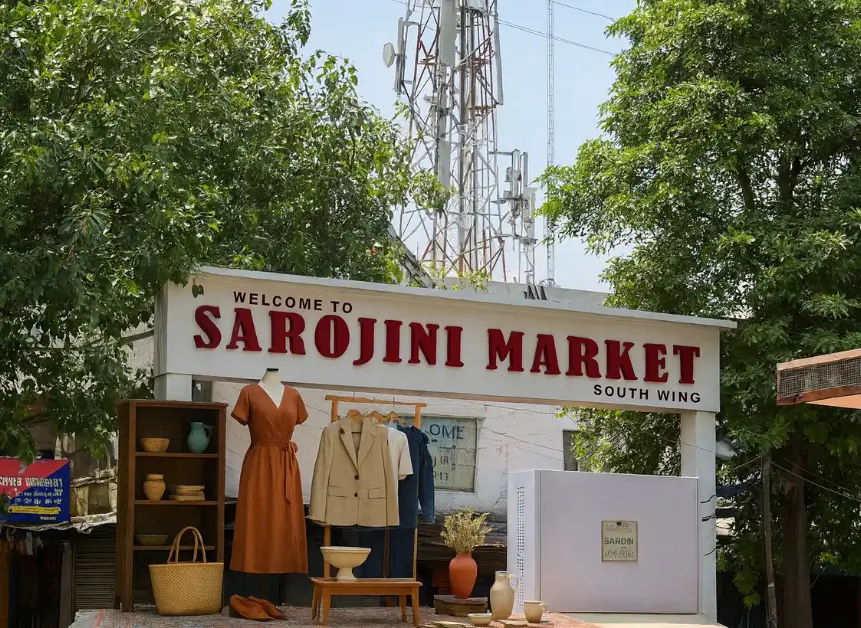
🏙️ 1. Sarojini Nagar Market, Delhi — Fashion’s Wild West
If New York has SoHo, Delhi has Sarojini.
This market is chaos in its most profitable form.
Imagine hundreds of stalls spilling over with export rejects — Zara, H&M, Mango — all at prices so low they feel illegal.
Here, every girl learns her first real-life skill — bargaining.
Vendors shout, “Didi 200 ka last price!” while another drags a mannequin by the neck into traffic.
It’s noisy, sweaty, and completely addictive.
Buy: trendy clothes, bags, shoes.
Pro Tip: Never pay more than half the first price. If they quote ₹800, start at ₹300 and walk away — they’ll call you back.
Why Global Shoppers Love It:
You can recreate entire Pinterest outfits for under $20.
🌊 2. Colaba Causeway, Mumbai — Where Colonial Meets Bohemian
Walk under the shadow of the Gateway of India,
and you’ll find yourself surrounded by books, jewelry, and the faint smell of sea salt.
Colaba Causeway feels cinematic.
Every café looks like a scene from a movie —
and every shopkeeper looks like he’s seen every kind of tourist since the 70s.
Here, you can buy a silver chain and discuss philosophy with a vendor in the same breath.
Buy: Boho jewelry, diaries, souvenirs.
Pause: Have a cold beer at Leopold Café — every backpacker since the Beatles has been there.
🌆 3. Commercial Street, Bangalore — The Trendy Chaos
Commercial Street isn’t as raw as Sarojini, but it has its own rhythm —
college students, digital nomads, and techies hunting for weekend fashion deals.
The market blends old-world spice shops with Instagram boutiques.
The air smells like sandalwood and street-side perfume.
Buy: ethnic fusion wear, bags, and shoes.
Global Appeal: International tourists love the “fusion fashion” concept here — Indian embroidery meets Western silhouettes.
💍 4. Laad Bazaar, Hyderabad — The City of Bangles and Brides
Hyderabad doesn’t do “minimalism.”
It does grandeur — and Laad Bazaar is proof.
This market is a river of colors — thousands of glass bangles, bridal sarees, and pearls glowing under yellow bulbs.
It’s noisy, crowded, and heartbreakingly beautiful.
You can feel history breathing through every stall.
Buy: bangles, pearls, Hyderabadi jewelry.
Smell: rose ittar (natural perfume).
Pro Tip: Avoid touristy stores — head deep inside the alleys for real deals.
🪞 5. Banjara Market, Gurgaon — Where Imperfection Is Beautiful
You can also read this post if you want : Banjara Market Furniture Online – Best Places to Buy Rustic & Handmade Pieces
Banjara Market is a paradox — half chaos, half calm.
Rows of wooden mirrors, distressed tables, and handmade pottery cover the roadside.
Every piece looks slightly uneven — and that’s exactly what makes it perfect.
You’ll find foreign interior designers here digging through piles of old wood,
bargaining in broken Hindi,
while locals carry mirrors taller than themselves on motorcycles.
Buy: rustic furniture, boho décor, antique frames.
Global Hook: The “rustic + sustainable” aesthetic has huge appeal for Western décor lovers.
Pro Tip: Bring a car — delivery here is “desi logistics at its best.”
👑 6. Johari Bazaar, Jaipur — The Royal Glitter
If Sarojini is chaos, Johari Bazaar is class.
Pink sandstone arches, golden jewelry shops, and the faint smell of sweets in the air.
This is where Rajasthani royalty used to shop — and the craftsmanship shows.
Buy: gemstones, Kundan jewelry, lehengas.
Pro Tip: Buy from certified stores — there’s a thin line between authentic and almost authentic.
Every corner here is photo-worthy — pastel walls, golden shops, and women in bright sarees bargaining with pride.
🍰 7. New Market, Kolkata — Organized Chaos Since 1874
Imagine Victorian architecture colliding with Indian street energy —
that’s New Market.
The sound of old ceiling fans, the smell of Nahoum’s bakery, and the narrow aisles full of people.
There’s a strange poetry in its mess.
Buy: sarees, crockery, books.
Tip: Always ask the shopkeeper “Bhalo daam dao” — Bengali for “give me a good price.” They’ll smile and you’ll win the first round of bargaining.
🌴 8. Anjuna Flea Market, Goa — Hippie Heaven
Once a gathering for backpackers in the 60s,
today Anjuna is a global flea paradise.
Music plays, incense burns, and the smell of sea salt mixes with fresh leather bags.
Vendors from all over Asia sell handmade goods here.
Buy: bohemian jewelry, tie-dye clothes, dreamcatchers.
Scene: Sunset + live drums + chai stalls — it’s not shopping, it’s a festival.
Pro Tip: Don’t buy the first thing you like. Walk around — you’ll find the same item cheaper two stalls later.
💎 9. Johari Bazaar, Jaipur — The Royal Sparkle
Yes, it deserves to be mentioned again.
This is where India’s gemstone legacy lives — centuries-old jewelry houses and family-owned stores that have worked with maharajas and film stars alike.
Buy something small — even a silver ring — and you’ll carry a piece of India’s royal history.
🌺 10. Dilli Haat, Delhi — India Under One Roof
Technically not a “street,” but it captures the soul of every one of them.
Dilli Haat brings artisans from across India — each stall a different state.
You can eat momos from Sikkim, buy Pashmina from Kashmir, and take home Madhubani paintings — all in one afternoon.
Buy: crafts, textiles, jewelry.
Eat: try Rajasthani thali — spicy, authentic, and unforgettable.
🌾 11. Jew Town, Kochi — The Antique Whisper
This place doesn’t shout, it whispers.
Quiet lanes filled with the smell of spices and old wood.
Every shop is like a time capsule — brass lamps, carved furniture, antique maps.
Buy: antiques, spice boxes, old coins.
Pro Tip: Bargain softly. Most shopkeepers are serious collectors, not hagglers.
Walk slowly — this place isn’t for rush. It’s for reflection.
🧵 12. Hazratganj, Lucknow — Where Heritage Wears Perfume
If Delhi sells attitude, Lucknow sells grace.
Hazratganj isn’t loud like Sarojini or messy like Colaba — it’s elegant, measured, and effortlessly classy.
Here, time moves slower.
Shops with colonial pillars sell chikankari kurtas — hand-embroidered pieces that take weeks to finish.
Perfume stores with vintage glass bottles still sell ittar, natural oils once worn by nawabs.
The air smells of roses, kebabs, and nostalgia.
Shopkeepers speak in Lucknowi tehzeeb — polite Urdu that could charm even the most impatient tourist.
🛍️ Must Buy: Chikankari apparel, handmade perfumes, jootis.
💡 Insider Tip: Visit in the evening; lights transform the bazaar into a postcard.
💬 Traveler Insight: “It’s less of a market and more of a mood.”
🛍️ 13. MG Road, Pune — The Calm in the Chaos
MG Road doesn’t scream for attention; it whispers refinement.
It’s clean, organized, and feels more like a European high street than a typical Indian bazaar.
Young professionals, college students, and even families stroll here without the frantic push and pull of North Indian markets.
You’ll find everything — branded shoes next to a guy selling belts on the pavement, booksellers chatting with tea vendors, tailors working in tiny cubicles.
🛒 Must Buy: Leather goods, watches, indie books, home décor.
🍦 Don’t Miss: The legendary Kayani Bakery for Shrewsbury biscuits — they’re as iconic as the market itself.
💡 Pro Tip: Sundays are best for relaxed browsing — but come before noon, the good stuff sells fast.
🧶 14. Pondy Bazaar, Chennai — A Symphony of South Indian Color
If you want to see Chennai’s real heart, skip the malls — go to Pondy Bazaar.
It’s not curated or polished — it’s alive.
Vendors shout in Tamil, kids run around with sugarcane juice, and women haggle for silk sarees under neon lights.
There’s a rhythm here that only makes sense once you stop resisting and start flowing with it.
🧵 Must Buy: Handloom sarees, imitation gold jewelry, cotton kurtas.
💰 Average Price: ₹200–₹5,000.
💡 Local Tip: Bargain gently — and if a shopkeeper offers coffee, accept it; it’s their way of showing respect.
For foreigners, this market is an education in how tradition never goes out of style.
🏞️ 15. Police Bazaar, Shillong — The Market in the Clouds
You haven’t really shopped until you’ve bartered in the rain.
Police Bazaar sits in the misty hills of Shillong — small, charming, and full of warmth.
Here, stalls sell bamboo crafts, handwoven shawls, and tea from local farms.
The air is fresh, the crowd polite, and the experience peaceful — a rare thing in Indian shopping.
🧣 Must Buy: Shawls, bamboo baskets, organic tea, local spices.
☕ Local Snack: Tungrymbai — fermented soybeans (try once in your life).
💡 Pro Tip: This market closes early (around 7 PM) — plan daytime visits.
🪔 16 (Extra). Jew Town, Kochi — History You Can Hold
This is the final stop in our journey — and arguably the most soulful.
Jew Town is an antique lover’s dream.
The old lanes smell like cinnamon and sea salt.
The wooden furniture feels like it’s absorbed centuries of stories.
Here, Christian, Muslim, and Jewish influences mix into one seamless tapestry —
you’ll see an antique shop run by a Hindu man selling a 200-year-old menorah to a European collector.
It’s calm, poetic, and deeply human.
🪞 Must Buy: Antiques, brass lamps, spice boxes, old maps.
💡 Insider Tip: Talk to the owners. Many will tell you where each piece came from — sometimes from demolished mansions or ancient temples.
📸 Photography Tip: Morning light brings out the texture of old walls — perfect for travel bloggers.
💬 How to Bargain Like a Local (Without Being Rude)
- Start low — always.
- Never show too much excitement (even if you love the item).
- Smile — anger ruins the deal.
- If they say “fixed price,” walk away — 70% chance they’ll call you back.
- Remember: it’s a dance, not a fight.
💰 Approximate Price Ranges
| Category | Price Range (₹) | Notes |
|---|---|---|
| Clothes | 200–2000 | Export surplus / streetwear |
| Jewelry | 500–10,000 | Metal, silver, semi-precious |
| Furniture | 1000–30,000 | Banjara, Jew Town |
| Décor | 200–5000 | Handcrafted items |
| Antiques | 1000–50,000+ | Negotiate wisely |
🌍 What Foreign Travelers Say
“I came for souvenirs, left with two suitcases and a new appreciation for noise.”
— Lara, UK
“The bargaining felt like a sport. I loved every second.”
— Tom, USA
“Banjara Market felt like Pinterest exploded in real life.”
— Ava, Australia
🌍 Bonus Section: How Global Travelers Can Plan a “Market Trail” Through India
If you’re visiting India for 10–15 days, you can actually plan your trip around these street markets — and it’ll be more memorable (and affordable) than any luxury tour.
🗓️ Suggested Itinerary:
| Day | City | Market | Theme |
|---|---|---|---|
| 1–3 | Delhi | Sarojini, Janpath, Dilli Haat | Fashion + Culture |
| 4–5 | Jaipur | Johari Bazaar | Jewelry + Textiles |
| 6–7 | Gurgaon | Banjara Market | Décor + Furniture |
| 8–9 | Goa | Anjuna Flea Market | Boho + Beachwear |
| 10–11 | Kochi | Jew Town | Antiques + Spices |
🧳 Travel Tips:
- Carry a foldable duffel bag. You will need extra space.
- Use GPay / Paytm — most vendors now accept digital payment.
- Don’t wear flashy jewelry — it ruins your bargaining power.
- Ask before taking photos — respect privacy.
- Keep your sense of humor. It’s India — the chaos is part of the fun.
🧠 Why India’s Street Markets Beat Any Mall in the World
Malls are predictable — clean floors, fixed prices, artificial smiles.
Indian street markets are the opposite — imperfect, unpredictable, alive.
You’ll meet people who handcraft jewelry with bare hands,
artists who carve furniture out of discarded wood,
and old women who’ll sell you handwoven scarves while blessing your future.
Every item has fingerprints — literally.
And that’s what makes these markets magical.
They remind us that not everything beautiful needs to be perfect,
and not every transaction has to be soulless.
If you ever doubt humanity, go to an Indian market.
You’ll see strangers laughing, bargaining, and somehow —
building trust one price negotiation at a time.
Because here, shopping is not just commerce.
It’s connection.