
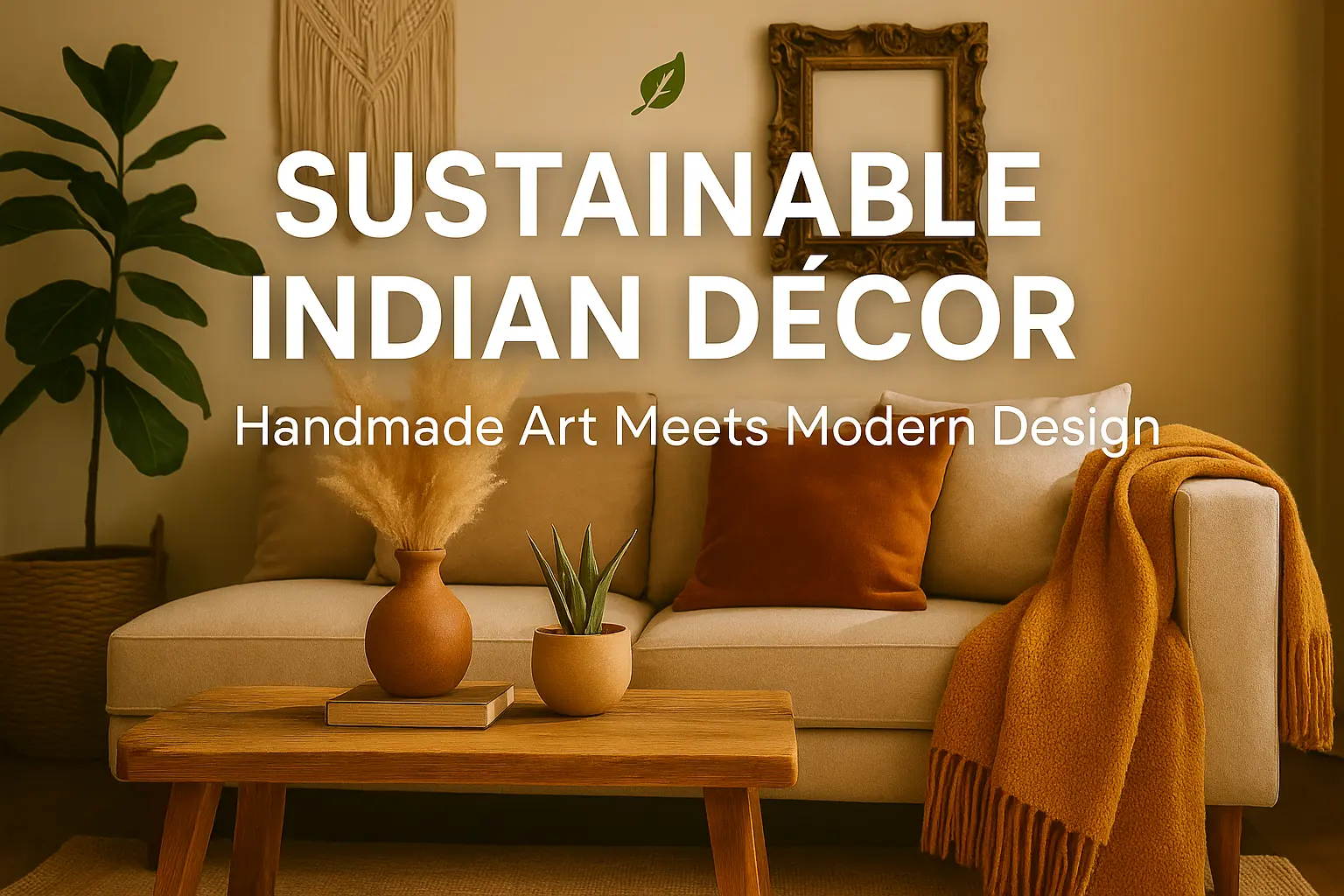
🪶 Introduction: Why Sustainability in Décor Is No Longer a Choice
We live in a world built on speed — fast fashion, fast food, fast décor.
Homes have become temporary spaces — full of synthetic furniture and trend-based items that lose value within a year.
But amid all this noise, a quiet revolution is unfolding — one rooted in patience, craftsmanship, and connection.
That movement is called Sustainable Indian Décor.
This isn’t about simply “buying eco-friendly stuff.”
It’s about rethinking design itself — seeing beauty not in perfection but in purpose.
And India, with its 5000-year-old craft heritage, has become one of the world’s most powerful voices in this conscious-living renaissance.
🌱 1. The Indian Way of Sustainable Living — Ancient Wisdom, Modern Relevance
Before sustainability was a buzzword, Indian households lived by it naturally.
Grandmothers re-used glass jars, fathers repaired wooden chairs, and mothers turned old sarees into curtains.
In Indian tradition, “nothing goes to waste” — not food, not fabric, not art.
This cultural philosophy is the root of sustainable design — a design that values longevity, balance, and respect for nature.
✨ The 3 Pillars of Traditional Indian Sustainability:
- Resourcefulness: Every item had multiple uses — waste was unthinkable.
- Local Craftsmanship: Artisans used raw materials from their surroundings — creating micro-economies.
- Spiritual Value: Beauty wasn’t just external; it reflected harmony between human and environment.
That’s why an Indian home wasn’t built — it was nurtured.
🪔 2. Handmade Art as the Heartbeat of Sustainable Design
A handcrafted item carries something a factory-made object never can — human energy.
When you touch a handwoven rug or a terracotta sculpture, you feel the rhythm of its maker’s hands.
🧶 The Psychology of Handmade Décor
- It creates emotional warmth — handmade textures make rooms feel alive.
- It connects people to purpose — you remember who made it, not just where you bought it.
- It reduces decision fatigue — when your home feels soulful, you need fewer things.
🪵 The Artisan’s Way
Indian crafts are deeply tied to ecology.
Clay potters work near rivers. Bamboo weavers live by forests. Khadi spinners depend on seasonal cotton.
Each product is in harmony with its ecosystem — nothing is extracted mindlessly.
This makes Indian handmade décor not only beautiful, but climate-intelligent.
🧺 3. Iconic Sustainable Indian Crafts — From Village to Vogue
| Craft | Region | Material | Why It’s Sustainable | Modern Use |
|---|---|---|---|---|
| Terracotta | West Bengal, Tamil Nadu | Natural clay | Biodegradable, no firing chemicals | Planters, tiles, lamps |
| Bamboo & Cane | Assam, Tripura, Kerala | Fast-growing grass | Renewable, light, versatile | Furniture, wall décor |
| Block Printing | Rajasthan, Gujarat | Organic cotton, natural dyes | Low waste, artisanal | Curtains, quilts, cushions |
| Dhokra Art | Chhattisgarh, Odisha | Recycled brass | Long-lasting, handmade | Sculptures, artifacts |
| Khadi & Handloom | Pan-India | Cotton, silk, wool | No synthetic dyes, low electricity | Upholstery, bedding |
| Papier-Mâché | Kashmir | Recycled paper pulp | Zero plastic | Bowls, trays, wall décor |
| Coir Craft | Kerala | Coconut husk | 100% biodegradable | Rugs, mats, storage baskets |
👉 Fact: Over 7 million artisans in India depend on these crafts — by choosing handmade décor, you directly support sustainable employment and cultural preservation.
🏡 4. Modern Homes Meet Ancient Materials
How do you make traditional crafts work in a sleek, urban home?
The trick lies in contrast and balance.
🌿 1. Minimalist + Textured
- Clean Scandinavian-style furniture
- Add one rustic wooden table, a jute rug, and terracotta lamps
→ Instantly warmer, more grounded.
🪶 2. Monochrome + Pattern
A modern white living room comes alive with block-printed curtains and handwoven throws.
🧱 3. Concrete + Clay
Pair industrial concrete walls with earthen planters, bamboo pendant lights, and linen cushions — raw meets refined.
💫 4. Mix Eras, Not Chaos
A vintage Rajasthani carved frame beside a minimalist mirror = conversation starter.
🌏 5. Sustainable Materials That Redefine Indian Design
🪵 Reclaimed Wood
It tells a story. Every scratch on a reclaimed teak table is a memory — of another home, another life.
It saves trees, reduces carbon, and brings soul to sterile modern interiors.
🧶 Jute
100% biodegradable, water-resistant, and earthy in tone.
It’s not just used for rugs — new designers use jute in lamps, wall panels, even headboards.
🧱 Terracotta
Terracotta breathes — literally. It cools spaces and replaces energy-hungry air conditioning.
🌾 Cotton & Linen
Organic cotton absorbs moisture naturally and pairs beautifully with wooden textures.
🌿 Natural Dyes
Indigo, turmeric, henna, and pomegranate rind — all create long-lasting color without toxins.
💚 6. The Human Impact: Sustainability Beyond the Home
When you decorate sustainably, you’re part of a much larger cycle — one that extends beyond aesthetics.
👩🎨 For Artisans
You give rural communities fair wages and global recognition.
You keep centuries-old skills alive.
🌍 For the Planet
You reduce industrial waste, promote low-carbon production, and encourage biodegradable materials.
🧠 For Yourself
You live in a space that reduces mental clutter.
A home made of honest textures and natural elements creates calm — not chaos.
🧘 7. The Emotional Science of Sustainable Indian Décor
A well-designed sustainable home has a measurable psychological effect.
📊 Studies show:
- Natural materials (wood, clay, jute) lower cortisol levels (stress hormone).
- Organic colors (brown, green, beige) improve sleep and mood.
- Handmade imperfections create feelings of authenticity and nostalgia.
When your space breathes, you breathe easier.
🛋️ 8. Design Guide: Creating Your Own Sustainable Indian Home
Here’s a step-by-step breakdown you can follow practically — even on a tight budget:
- Declutter First – Sustainability starts with less, not more.
- Identify Key Corners – Focus on 3–4 main décor zones (living room, balcony, hallway, study).
- Pick a Natural Palette – Choose colors like terracotta, sage green, mustard, beige, and off-white.
- Invest in Artisan Pieces – A handmade lamp, a reclaimed shelf, or handloom cushions.
- Layer Textures – Use different materials: bamboo + linen + clay.
- Avoid Plastic Decor – Replace with sustainable alternatives.
- Add Greenery – Indoor plants amplify the earthy vibe.
- Celebrate Imperfection – Don’t over-design. Let your home evolve.
🌸 9. The Global Rise of Indian Sustainability
From Milan to Melbourne, designers are turning to Indian crafts for sustainable luxury.
Big décor houses now partner with Indian clusters to produce ethical furniture collections.
Even luxury hotels (like Six Senses, Aman, and Oberoi) use Indian handlooms, local woods, and artisanal pottery in their interiors — showing that eco-conscious design can still be world-class.
Indian sustainable design has moved from village homes to Vogue covers.
🪞 10. Visual Inspirations
| Theme | Elements | Feel |
|---|---|---|
| Boho Minimalism | Bamboo lights, neutral palette, handwoven rug | Calm, global |
| Rustic Rajasthani | Terracotta lamps, carved furniture, mandala art | Warm, traditional |
| Tropical Conscious | Coir mats, greenery, rattan chairs | Airy, coastal |
| Urban Sustainable | Concrete walls, reclaimed tables, cotton textiles | Chic, modern |
| Artisan Chic | Brass lamps, handmade pottery, block prints | Cultural, elegant |
🔍 11. Buying Guide: Where & How to Shop Responsibly
🛒 Offline
- Banjara Market (Gurgaon) – best for reclaimed wood & rustic furniture
- Dilli Haat (Delhi) – diverse crafts from all over India
- Kalagram (Jaipur) – hand-printed textiles and pottery
💻 Online
- Okhai.org – women-led sustainable fashion & décor
- World Art Community – direct-from-artisan platform
- Jaypore.com – curated Indian luxury
- MainBanjaraMarket.in – global boho + Indian craft inspiration 🌍
🧭 12. Future of Sustainable Indian Décor Design
By 2030, the global home décor market will cross USD 200 billion,
and a huge portion of that will be sustainably sourced art and furniture from India.
Startups are emerging that blend AI with artisan design —
imagine an app that customizes a sustainable handmade interior based on your taste.
The fusion of technology + tradition is India’s next design revolution.
And you — as a conscious buyer — are part of that evolution.
🕉️ 13. The Spiritual Philosophy Behind Sustainable Indian Design
Sustainability in India isn’t a Western concept dressed in trend — it’s ancient wisdom repackaged.
In Vedic philosophy, “Vasudhaiva Kutumbakam” (the world is one family) teaches us to live in balance — not domination — with nature.
Indian homes, temples, and crafts are built around this harmony.
🪔 Ancient Design Principles That Shape Indian Sustainability
| Principle | Meaning | Application in Modern Homes |
|---|---|---|
| Vaastu Shastra | Spatial energy balance | Layouts that align with sun & wind flow |
| Panchamahabhuta | The five natural elements (Earth, Water, Fire, Air, Space) | Using natural materials to balance energy |
| Ahimsa | Non-violence, even in design | Avoiding plastic, chemical dyes, synthetic fabrics |
| Samskara | Respect for what already exists | Upcycling old materials, reusing heirlooms |
When you decorate your home sustainably, you’re not just making it beautiful —
you’re aligning it with a philosophy that values life, time, and the planet.
🏛️ 14. Architecture Meets Craft: Building Sustainable Homes the Indian Way
Interior design is only half the story — the foundation of true sustainability lies in architecture itself.
India’s vernacular architecture (regional building style) is naturally sustainable — built for the local climate and materials.
🧱 Traditional Design Lessons That Inspire Modern Sustainability
- Courtyard Houses (Chowks):
Open central spaces that promote natural ventilation and light — no need for air conditioning. - Mud and Lime Walls:
Breathable, insulating, and carbon-neutral — used in Rajasthan, Kerala, and Gujarat. - Terracotta Tiles:
Cool interiors and timeless appeal — eco-friendly and repairable. - Sloping Roofs with Clay Tiles:
Rainwater harvesting + thermal insulation — found in South India.
🏗️ Modern Architects Reviving Indian Craft
- Sanjay Puri Architects (Mumbai) — combines concrete with handcrafted terracotta screens.
- Anupama Kundoo — known globally for her sustainable “handmade architecture.”
- Studio Lotus (Delhi) — pioneers of blending Indian heritage with green modernism.
These modern examples show how Indian design is redefining global architecture — not with steel and glass, but with soul and sustainability.
🌍 15. The Global Shift: How Indian Crafts Influence Western Design
In the last decade, Indian design principles have begun shaping Western interiors in unseen ways.
🌾 From Local to Global:
- IKEA launched its INDUSTRIELL line inspired by Indian handmade imperfection.
- Anthropologie collaborates with Indian block-print artisans.
- Restoration Hardware sources reclaimed Indian teak for luxury furniture.
Even minimalist Scandinavian designers are adopting Indian natural imperfection —
proving that “perfect symmetry” is no longer modern; authentic texture is.
🌸 Why Western Audiences Love Sustainable Indian Décor
- It’s honest: handmade means human-made.
- It’s ethical: fair trade + cultural respect.
- It’s timeless: Indian craftsmanship never dates out of fashion.
- It’s warm: earthy tones soften cold, sterile spaces.
👉 Indian design has gone from “ethnic niche” to global design language.
🧘 16. The Psychology of Living Sustainably
You might wonder — how can furniture or fabric affect our mind?
But studies show that our environment changes how we think, feel, and heal.
🧠 Mindful Décor = Mindful Life
| Element | Psychological Impact | Example |
|---|---|---|
| Natural textures (wood, jute) | Reduce anxiety and tension | Jute rug or bamboo chair |
| Warm earthy colors | Induce comfort and stability | Terracotta pots, beige walls |
| Handmade imperfection | Promotes gratitude & emotional safety | Uneven clay lamps |
| Open spaces | Improves focus & clarity | Minimal layouts with natural light |
| Plants & greenery | Lower heart rate & improve mood | Indoor jungle corners |
In other words — a sustainable home is a therapeutic space.
It’s not about looking rich; it’s about feeling alive.
🧩 17. How to Transition Your Home into a Sustainable Space — A Real Plan
Let’s break it down step by step.
🪶 Phase 1: Awareness
- Audit what you own.
- Identify what’s wasteful (plastic décor, cheap MDF furniture).
- Make a “Replace With Natural” list.
🧵 Phase 2: Replace Gradually
- Swap synthetic cushions → handwoven cotton covers.
- Plastic plant pots → terracotta planters.
- LED light covers → bamboo pendants.
🪵 Phase 3: Redesign Intentionally
- Rearrange rooms for airflow.
- Use cross-ventilation instead of fans.
- Add textures through jute rugs, clay art, or wood instead of buying new.
💚 Phase 4: Long-Term Maintenance
- Repair instead of replace.
- Buy fewer, better pieces.
- Celebrate handmade — not perfection.
🌸 18. The Role of Women in India’s Sustainable Design Movement
Indian women have always been at the heart of sustainability — from rural artisans to urban designers.
- Self Help Groups (SHGs): Women in Gujarat, Odisha, and Bihar create eco-friendly crafts for global export.
- Brands like Okhai, RangSutra, and Sasha empower female artisans to lead production chains.
- Design Entrepreneurs: Young women are building sustainable décor startups (e.g., Nila House, Jaipur Rugs, Bare Necessities).
By choosing sustainable Indian décor, you don’t just buy beautiful things —
you invest in gender equality and cultural preservation.
🪙 19. Economy of Sustainability: Handmade as a Growth Engine
Sustainable design isn’t just ethical — it’s economically powerful.
- The Indian handicraft export industry is worth over $3.4 billion (2024).
- Global brands are now collaborating with Indian artisan clusters.
- “Slow luxury” — products that last and tell stories — are replacing fast décor globally.
So when you buy handmade Indian décor, you’re fueling a self-sustaining economic loop:
Artisan → Fair Trade → Consumer → Artisan Again
That’s how true circular economy works — not through machines, but through people.
🪞 20. Interior Styling Tips from Indian Design Experts
Here’s how India’s top designers and architects suggest blending sustainability and beauty:
🌿 Ritu Kumar (Designer):
“Sustainability isn’t about giving up luxury — it’s about redefining it.”
🧱 Bijoy Jain (Architect, Studio Mumbai):
“Materials have memory. When you use clay, wood, and light, you create architecture that feels alive.”
🪔 Sunita Kohli (Interior Restorer):
“Indian homes should tell stories — of heritage, resilience, and warmth.”
Practical Styling Tips:
- Always add a handmade centerpiece — rug, lamp, or pottery.
- Layer light + shadow with organic textures.
- Keep one wall natural — lime-washed or textured clay.
- Use multi-functional furniture — benches that double as storage.
🌾 21. Beyond India: How the World Can Learn from Indian Sustainability
India offers the world a blueprint for future living —
where progress doesn’t come at the planet’s expense.
While the West is rediscovering sustainability, India has never forgotten it.
The clay pot, the jute mat, the handmade quilt — these are living proof of timeless innovation.
Indian sustainable décor isn’t nostalgia — it’s foresight.
🌍 22. Challenges & The Road Ahead
Sustainability isn’t perfect. The journey has hurdles:
- Lack of awareness among urban consumers.
- Inconsistent pricing of handmade products.
- Artisans struggling with digital visibility.
But the future is hopeful —
Government initiatives like “Make in India,” “Vocal for Local,” and “One District One Product”
are putting Indian craftsmanship on the global map.
Add to that the rise of eco-conscious Gen Z buyers — and you have a market that truly values authenticity.
🌸 23. The Legacy You Leave
When you decorate your space sustainably, you create ripples that last generations.
Your children will grow up surrounded by stories, textures, and values — not plastics.
And one day, when they hold a clay pot or touch a handwoven fabric,
they’ll remember not just how their home looked, but what it stood for.